SaaS pricing is not always fixed - the price on a vendor's pricing page may not be the only option available, especially when you are renewing, changing seats, or consolidating tools. Better negotiation starts with knowing when to ask, what usage data to bring, and what decision you are prepared to make.
This guide covers the tactics that actually work for small and medium businesses, with specific language you can copy. No negotiation theater required.
Why SaaS Pricing Is Almost Always Negotiable
Vendors usually prefer retaining a good-fit customer over losing the account at renewal. That does not mean every vendor will discount, but it does mean you can often have a practical conversation about seats, billing cycle, contract length, and plan fit.
This dynamic is even more pronounced at renewal. The cost to acquire a new customer in SaaS averages 5–7x the cost of retaining an existing one. Your renewal is not a formality - it's a moment where the vendor is quietly worried about losing you. Use that.
The tools where negotiation works best: anything above $200/month total, anything with a named sales rep, any annual contract, and any platform-level tool where switching costs are high enough that the vendor knows you're unlikely to actually leave. Negotiation works less well on small-ticket self-serve tools with no sales team - those are often genuinely fixed pricing.
Six Tactics That Actually Work
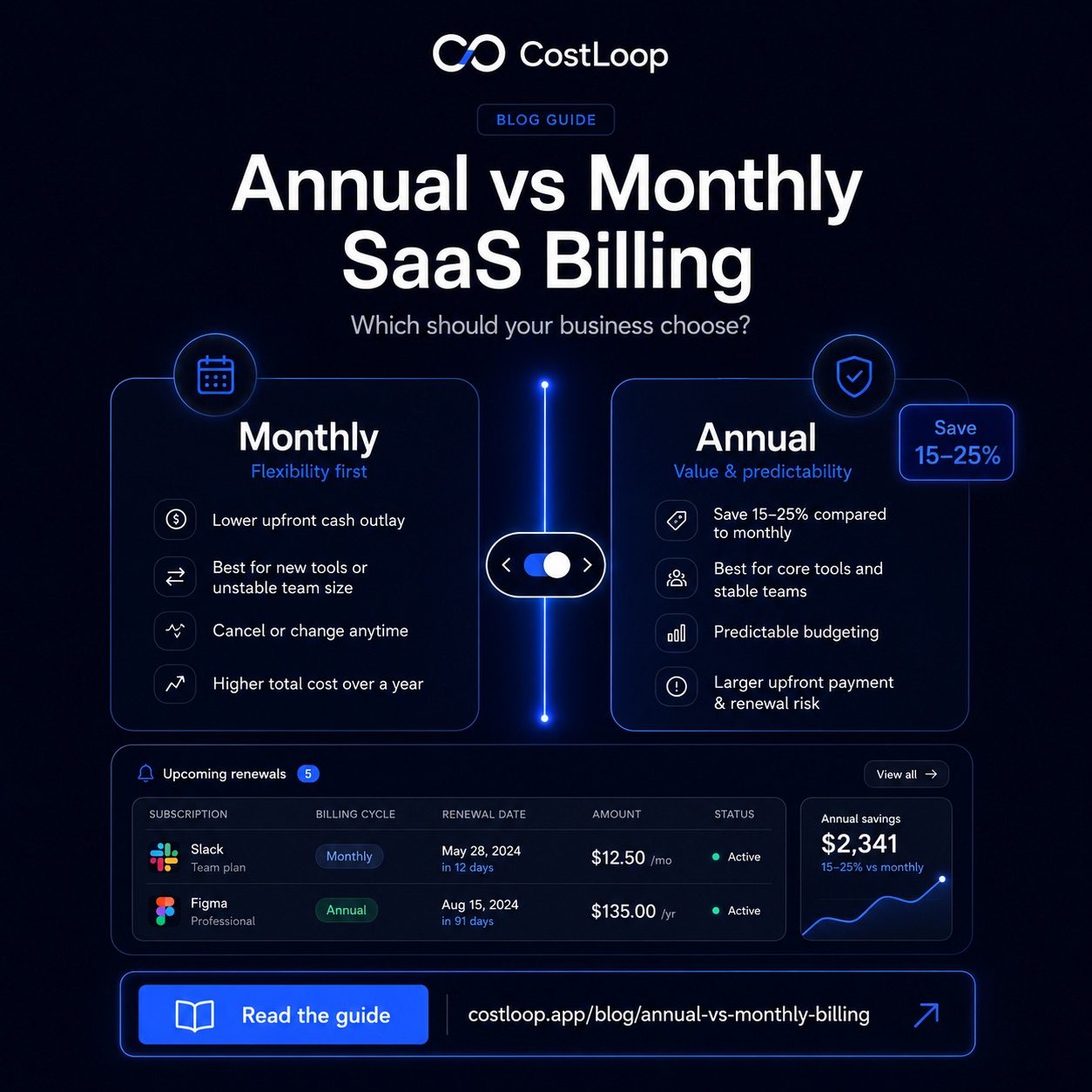
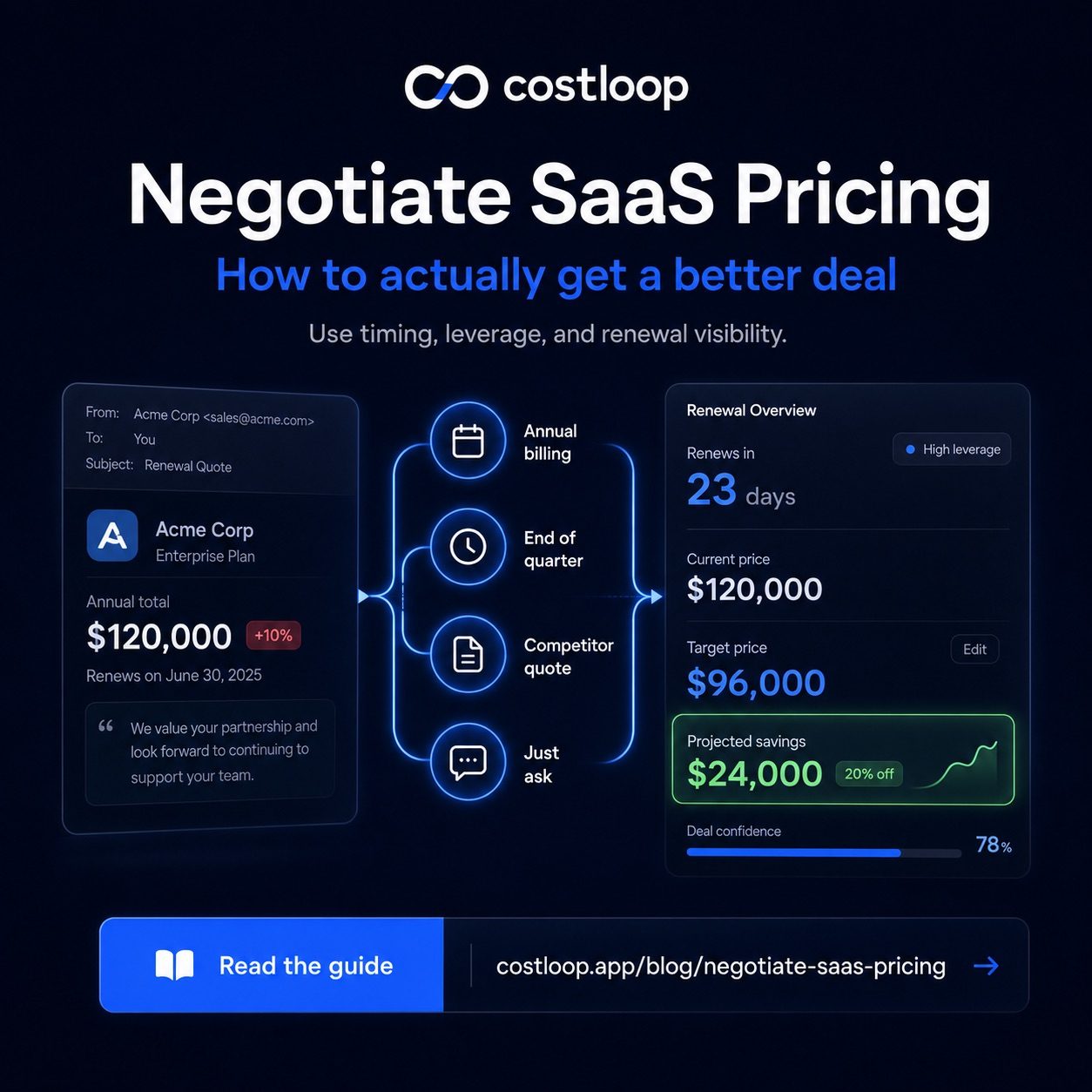
- Commit to annual billing. This is the easiest and most reliable discount - Vendor-specific off the monthly rate in exchange for paying upfront for the year. Most vendors offer this automatically. If they don't advertise it, ask. This works even for small accounts with no sales contact.
- Time your ask for end of quarter. SaaS sales teams have quarterly quotas. In the last two weeks of March, June, September, and December, sales reps are motivated to close - or retain - business before the quarter closes. That's when they have the most flexibility to approve discounts without lengthy approval chains. If you have a renewal coming up and can time your conversation for late in a quarter, do it.
- Get a competing quote. You don't need to be lying when you say "we're evaluating alternatives." Actually look at competitors - most have free trials. A genuine quote from an alternative vendor gives you real leverage and real information. If the competitor is close enough to switch to, the vendor needs to know that.
- Ask for multi-year pricing. Committing to two or three years in exchange for a lower annual rate is a straightforward trade that most vendors will accept. They get revenue predictability; you get a discount beyond what annual billing alone provides. Good for tools you're confident you'll use long-term.
- Offer something non-monetary. Agreeing to be a reference customer, participating in a case study, or providing a testimonial quote has real value to a SaaS vendor. It can unlock discounts that pure price negotiation wouldn't. This works especially well with growing vendors who need social proof.
- Simply ask. This sounds obvious, but most people don't do it. A direct, polite request for a discount - even with no specific leverage - works more often than you'd think. Vendors have discretionary budget for exceptions, and "our budget is tight, is there any flexibility?" is a completely normal thing to say.
What to Actually Say: Email Templates
Here are three email templates for common scenarios. Edit them to match your situation - the key is being direct and giving a concrete reason.
Template 1: Renewal negotiation email - asking your vendor for a better deal
Subject: [Your company] renewal  -  pricing question

Hi [Name],

Our contract renews on [date] and we've been happy with [tool] overall.

Before we confirm the renewal, I wanted to ask about pricing. We're working with a tighter software budget this year and I'd like to understand if there's any flexibility  -  either on the per-seat rate or on the overall contract structure.

We're open to committing to another annual term. We're also evaluating a few alternatives to understand our options, so having a clear picture of what's possible with you would help us make the decision faster.

What can you do for us?

Thanks,
[Your name]
Template 2: SaaS contract negotiation email - first-time purchase
Subject: Quick question before we purchase

Hi [Name],

We're ready to move forward with [tool]  -  we've tested it and it fits what we need.

One thing: the list price for [N] seats on the annual plan is [X], which is a bit over our target for this category. Is there flexibility here, either on price or on including some additional seats/features at the same rate?

We're happy to pay annually upfront and can move quickly if we can get to [target price or X% lower].

Let me know what's possible.

Thanks,
[Your name]
Template 3: SaaS pricing tier increase - pushing back on a vendor price hike
Subject: Re: [Tool] pricing update

Hi [Name],

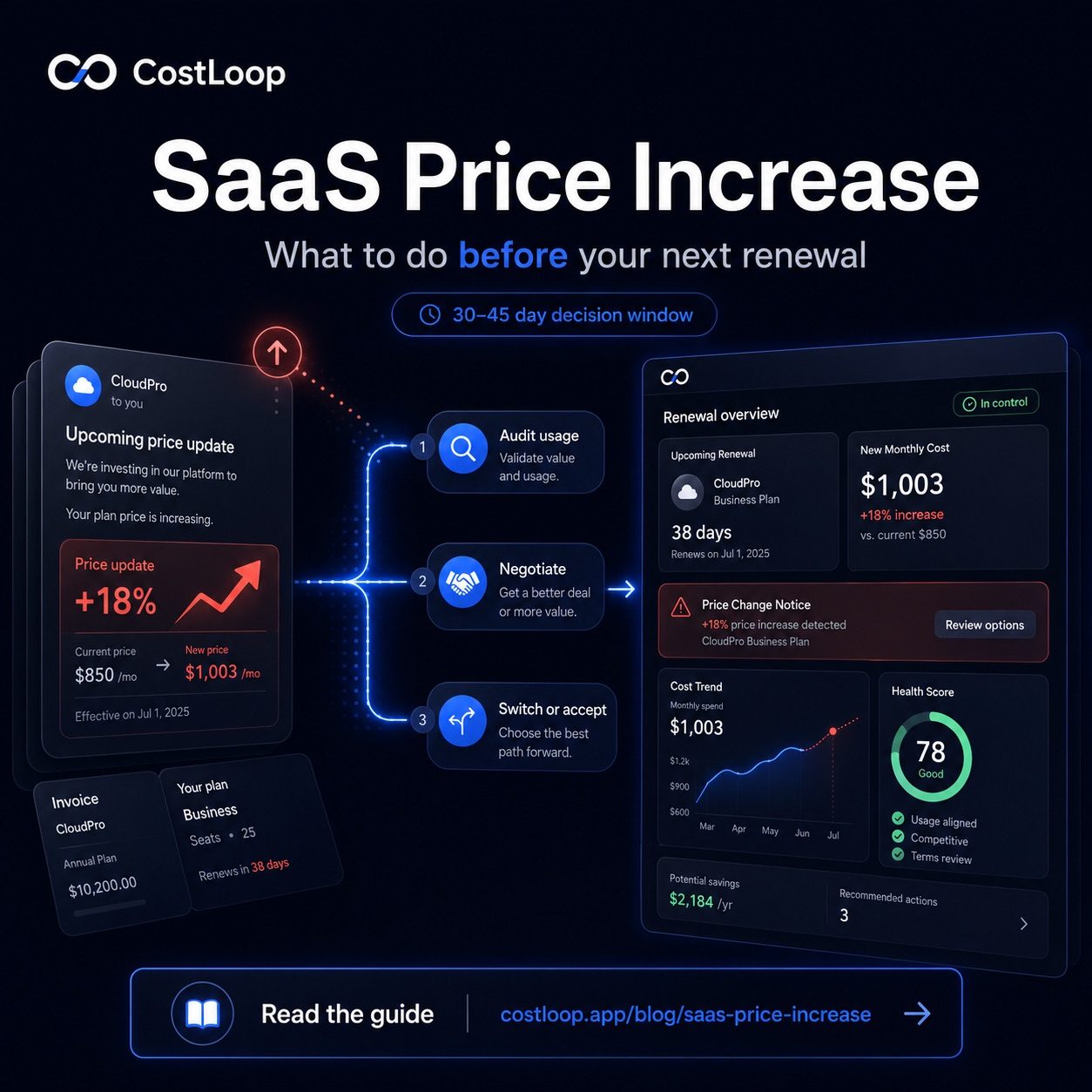
Thanks for the heads up on the pricing change. A [X]% increase is significant for us  -  we weren't budgeting for this.

I'd like to discuss before we confirm the renewal. A few questions:

1. Is there any way to lock in current pricing for another year if we commit now?
2. Is the increase applied uniformly, or is there flexibility for accounts like ours?
3. What options do we have if current pricing isn't feasible?

We like [tool] and would prefer not to switch, but we do have alternatives we'd move to if pricing doesn't work. Happy to jump on a call if that's easier.

Thanks,
[Your name]
The single biggest factor in SaaS negotiation is timing. A SaaS renewal tracker like CostLoop tracks every renewal date and alerts you 30-60 days in advance - giving you the lead time to negotiate instead of just auto-renewing. See your full subscription overview in one place.
Start free - no credit card neededWhat Vendors Won't Negotiate On
Not everything is moveable. Here's where pushback is normal:
- Self-serve tools under $50/month. If there's no human sales process, there's usually no discount mechanism either. The margin math doesn't support one-off exceptions at that price point.
- Recent post-trial conversions. You just locked in. Vendors know you've already decided. Your leverage is at its lowest right after you sign up or convert from a trial.
- Non-negotiable compliance costs. Some charges - like data processing fees or compliance-required features - aren't discretionary. Vendors will tell you this directly.
Building a Negotiation Mindset Into Your Renewal Process
The best negotiators don't approach each renewal as a one-off battle. They build it into their process. Every tool in their stack has a renewal date on a calendar. Sixty days before each renewal, they do a quick utilization review: are we actually using this? At what seat count? What's the market look like? That review surfaces both cancellation candidates and negotiation opportunities before they become time-pressured decisions.
When your vendor calls to discuss renewal, you want to come in knowing your usage data, knowing what alternatives exist, and having already decided your walk-away position. That's not a confrontational stance - it's just being prepared. It also means you're less likely to get surprised by a SaaS price increase you weren't expecting.
The most common reason small and medium businesses overpay for software isn't that vendors are unreasonable - it's that renewal conversations happen without preparation, and unprepared buyers accept the status quo. A review before your largest renewals, combined with a direct email asking about flexibility, can turn renewal dates into active decisions instead of automatic charges. That's not a rounding error. That's a meaningful result from reducing software spend systematically.
SaaS price optimization: negotiation as a spend management lever
Most SaaS pricing is negotiable, especially at renewal for annual contracts. The key is knowing your leverage before the conversation: usage data (are you using all seats?), competitive alternatives (what would you pay elsewhere?), and your renewal timeline (negotiating 45 days before renewal gives more leverage than negotiating at the last minute when the vendor knows you have no time to switch).
SaaS price optimization is one lever in the broader SaaS spend management toolkit. The others - cancelling unused tools, downgrading tiers, reclaiming seats - reduce cost without negotiation. Negotiation on tools you genuinely need and can't cut is the final lever. It works best when you've already done the other work: you've audited your stack, removed the obvious waste, and now you're optimizing the cost of tools you're committed to keeping. Common wins include switching to a better-fit tier, right-sizing seats, comparing annual terms, or restructuring the SaaS contract before the next increase.
What is SaaS price optimization?
The practice of actively reducing what you pay for SaaS tools through a combination of negotiation, tier downgrade, seat reduction, and competitive switching. Distinct from simply cutting tools - SaaS price optimization focuses on tools you genuinely need and want to keep, finding ways to pay less for them rather than eliminating them.