You are going through your bank statement and spot charges from tools your team has not opened in months: a design tool, a marketing platform evaluated during a trial, and a project management tool everyone quietly migrated away from. None of these were meant to keep charging you. You meant to cancel them. You just... didn't. This is the forgotten subscription renewal problem that quietly drains budget when nobody owns renewal decisions, and the only real fix is proper subscription management.
This is one of the most common and quietly expensive problems in software spending. Unlike a one-off bad purchase, a forgotten subscription charges you repeatedly and indefinitely until you actively stop it. Each individual charge might be small enough to ignore, but the accumulation is not.
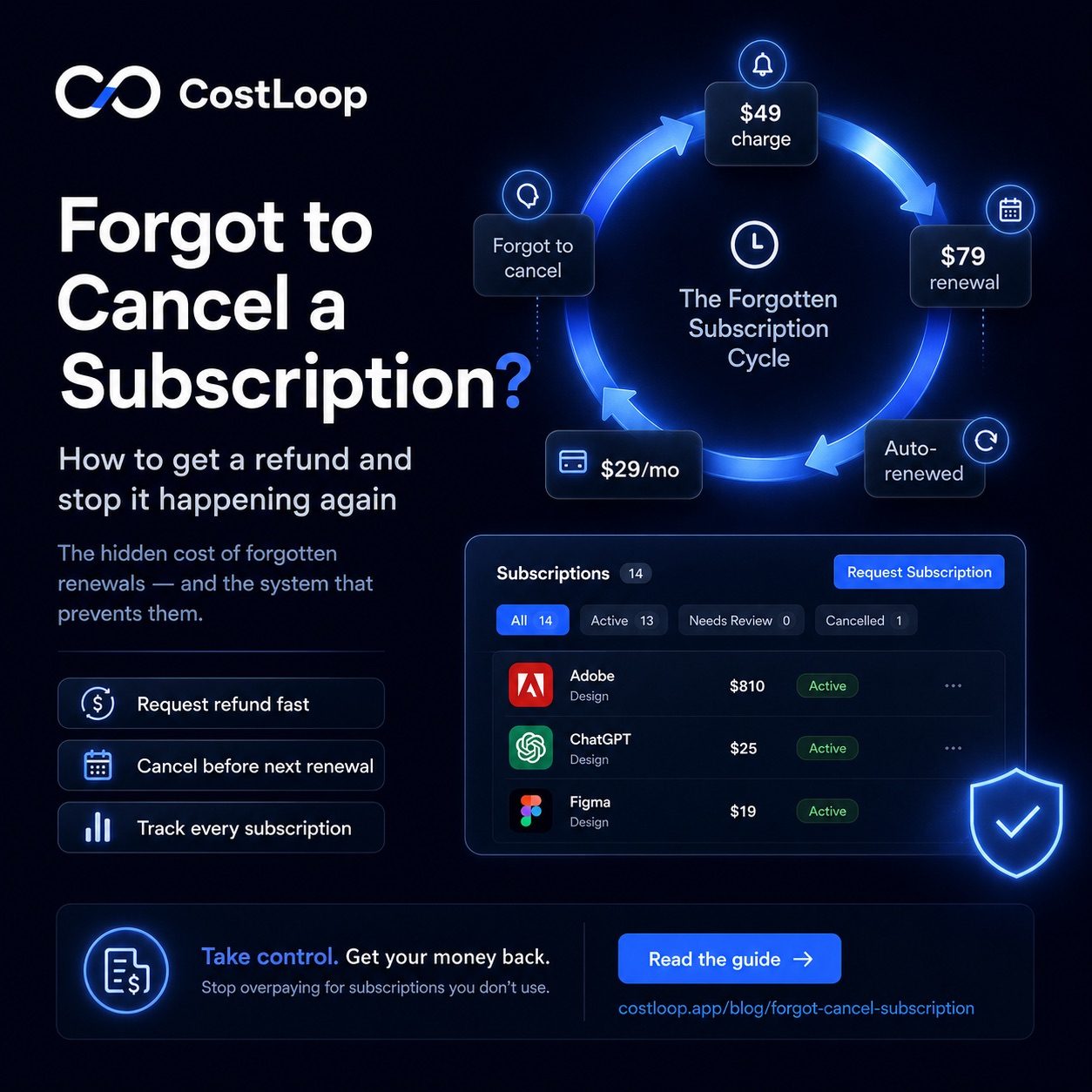
The forgotten subscription cycle: how auto-renewal charges build up
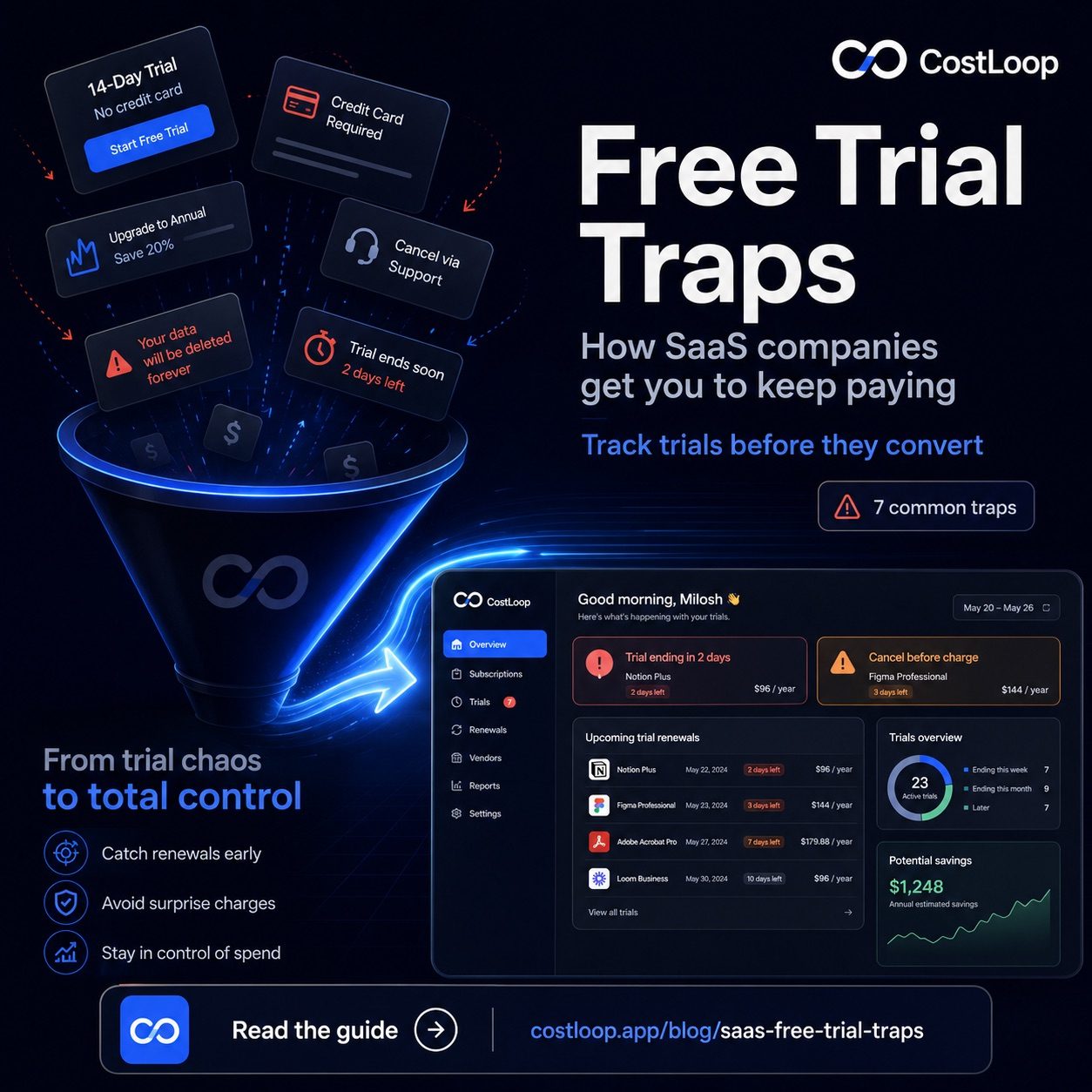
Forgotten subscriptions usually follow a predictable pattern. You sign up - often for a free trial that requires a credit card. The trial ends, the billing starts, and you're busy enough that the first charge slips by unnoticed. A month later, same thing. By the third or fourth charge, you might spot it and think "I should cancel that." But you're in the middle of something else, so you close the bank app and continue your day. The mental note evaporates. The charges don't.
Annual subscriptions are especially dangerous in this cycle. You pay $299 upfront for a tool you were enthusiastic about at the time. You use it for three months, then drift toward a different solution. By the time month twelve arrives and you're charged again, you've genuinely forgotten you have the account - let alone that you're paying annually. The charge hits and feels like it came from nowhere.
The mechanism behind this is straightforward: SaaS vendors have no commercial incentive to remind you that you might not need their product anymore. Most renewal notifications are buried in a transactional email that arrives on the charge date, not before it. By the time you see it, the money is already gone - the auto-renewal charge has hit your credit card and the recurring payment is locked in for another cycle.
The real cost: doing the math
A hypothetical small team with several forgotten tools can quickly create avoidable recurring spend. The exact amount depends on the tools, billing cycles, and how long the charges continue. The practical lesson is simple: every subscription needs an owner, renewal date, and cancellation path before it renews again.
The harder cost to measure is the decision cost. Every renewal you miss is a decision that didn't happen. You didn't get to choose whether to keep paying. The money left without any deliberate act on your part. That loss of financial agency compounds across a business - if five people on your team each have a tool or two on company cards that nobody monitors, the collective leak can become meaningful without anyone being negligent or careless. Just busy.
Why subscription creep happens even to careful people
Multiple payment sources are a major factor. Business credit card, personal card used for a few tools, PayPal for one subscription, the occasional direct debit. No single statement shows everything. You'd have to actively reconcile four sources to get the full picture, and almost nobody does that monthly.
Annual subscriptions compound the problem because they're spaced far enough apart that you lose context. You don't remember whether you evaluated and cancelled a tool or just stopped using it. The charge arrives and you're not sure if it's a mistake or something you agreed to.
Team members adding tools independently make it worse still. Someone signs up for a $79/month video editing tool for a one-off project. The project ends. The person forgets about it. Nobody else even knows the subscription exists. These zombie subscriptions - forgotten software nobody uses but the business keeps paying for - are the hardest to catch. This is why SaaS renewal tracking is especially acute in small and medium businesses with shared or decentralized purchasing - there's no single person whose job it is to monitor the total.
What to do right now if it just happened
If you just found a charge you meant to cancel, act immediately - not later today, not this week. Here's the fastest path:
1. Check the refund window. Most SaaS vendors have a short grace period - typically 3 to 7 days - where they'll refund the most recent charge if you request it. Open a support chat or send an email right now. Be direct: explain you forgot to cancel before renewal and ask if a refund is available. It doesn't always work, but it works often enough to be worth trying every time.
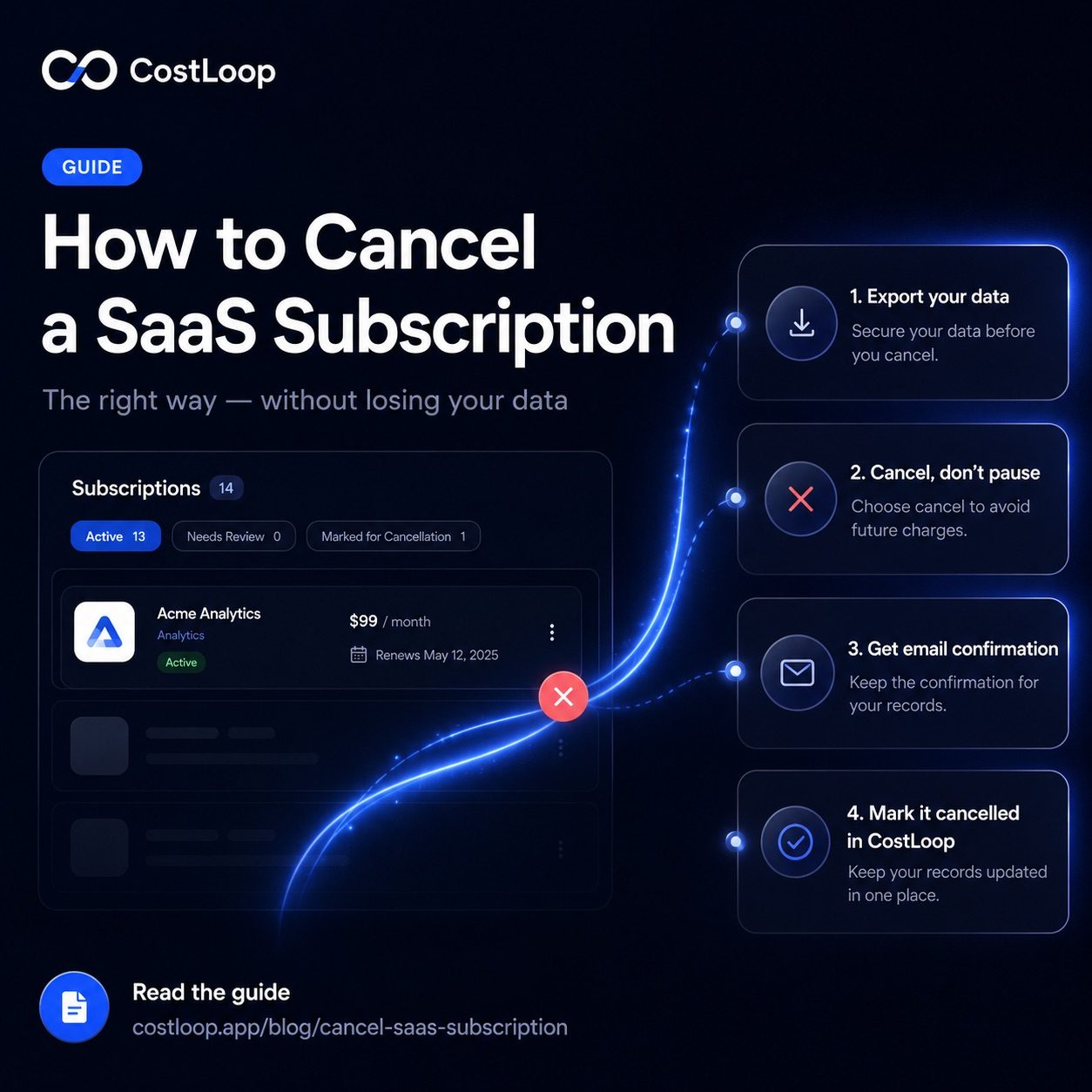
2. Cancel before you do anything else. Before you export your data, before you check if you might need it again, cancel the subscription. Every day you wait is another day closer to the next billing cycle. The cancellation can usually be reversed if you change your mind; an accidental charge cannot be un-charged. If you are not sure where the cancellation option lives, CostLoop's software cancellation guides cover the process for common tools.
3. Export any data you might need. Most tools let you export your data as CSV or PDF. Take five minutes to download anything valuable before your access expires. Projects, contacts, files - whatever you created inside the tool. You may never need it, but you'll be glad you have it if you do.
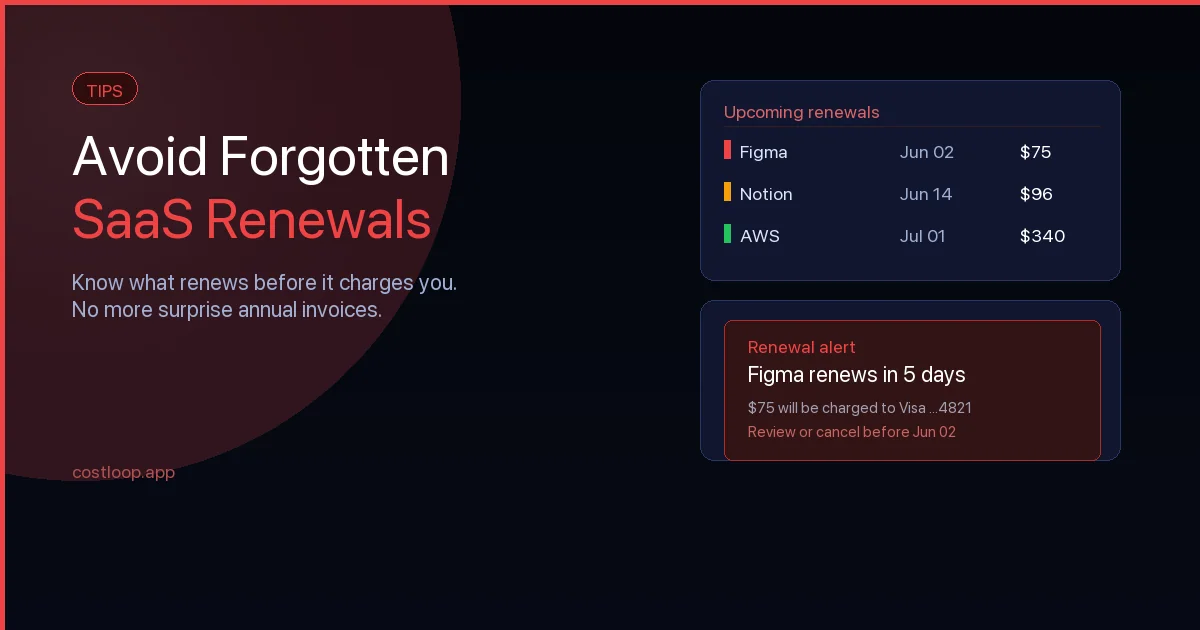
A subscription renewal tracker like CostLoop sends you renewal alerts before your subscriptions charge, so you always have time to decide. See your full features and start tracking in under 5 minutes.
Start free - no credit card neededLong-term prevention: the only thing that works
Willpower and good intentions are not a system. The only reliable way to stop forgotten subscription charges is to build a tracking habit with an actual reminder mechanism - not a mental note, not a calendar entry you might dismiss.
A recurring expense tracker with automatic renewal alerts is the most effective solution. Set alerts to fire 30 days before renewal. That gives you enough time to evaluate the tool, consider whether you actually use it, check if there's a cheaper alternative, and cancel if needed - before the charge happens. The full guide to subscription management best practices covers how to build this habit into your monthly workflow without it taking more than 10 minutes a month.
A quarterly review adds a second layer. Four times a year, open your tracker and go through every subscription. Ask two questions per tool: is someone actively using this? Is it worth what we're paying? The answer is often yes - but occasionally no, and those no's compound into real savings over time.
The combination of proactive alerts and periodic reviews essentially eliminates forgotten subscriptions as a category. You might still choose to keep paying for things after reviewing them - but you'll be choosing, not drifting.
If you've never had a central list of your subscriptions, CostLoop gives you one for free. Add every tool you pay for, set a renewal reminder for each one, and you've built the basic infrastructure that prevents this problem from recurring.
Why forgetting to cancel is a system failure, not a personal one
Forgetting to cancel a subscription is not a memory problem - it's a system problem. Vendors are specifically designed to minimize cancellations: no proactive renewal notices, auto-billing that requires opt-out not opt-in, difficult cancellation flows that take more effort than most people budget for in a busy week.
The fix is a system, not better personal memory: every subscription tracked in one place, renewal reminders that fire 30 days before each charge, and cancellation URLs stored per tool so you can act immediately when the reminder comes. For a guide to building this habit, see the guide on SaaS renewal tracking. For a tool built specifically to send these reminders, best subscription tracker for small and medium business covers what to look for.
Frequently asked questions
What happens when you forget to cancel a subscription?
The subscription renews automatically and your card is charged. Most vendors won't notify you proactively. You'll typically only notice when reviewing bank statements - often weeks or months after the charge.
Can you get a refund for a subscription you forgot to cancel?
Sometimes. Some vendors offer a short grace period (typically 3-7 days post-renewal) for refund requests, especially for annual plans. You need to contact support immediately, explain you forgot, and ask. Success rates vary by vendor.
How much do forgotten subscriptions cost the average business?
Even conservative examples add up fast. A few forgotten tools can turn into money that disappears without delivering any value.
How do I stop forgetting to cancel subscriptions?
The most reliable method is a dedicated subscription tracker with renewal reminders set 30 days in advance. That gives you time to decide whether to keep, cancel, or negotiate before the charge hits.
What's the best way to avoid forgetting to cancel subscriptions?
Use a subscription tracker with automatic renewal reminders. Store the cancellation URL for each tool at signup so you can act immediately when the reminder fires. Set 30-day alerts for annual subscriptions and 7-day alerts for monthly ones.