SaaS sprawl is what happens when a business accumulates more software tools than it can track, use, or justify. It is not a decision anyone makes deliberately. It happens gradually - one trial here, one team adding a tool without telling anyone there - until the monthly software bill is full of line items nobody can explain. The fix starts with better subscription management: knowing what you have, what it costs, and when it renews.
For small and medium businesses and freelancers, SaaS sprawl is particularly common because the buying friction is so low. Most tools have a free trial or a low monthly price that makes it easy to start using something without thinking carefully about whether you need it long term.
What causes SaaS sprawl
The root cause is almost always a lack of visibility combined with easy access to credit cards. When anyone on a team can sign up for a tool and expense it, and when nobody is tracking what has been signed up for, subscriptions multiply without anyone noticing. This tool proliferation happens gradually - each addition seems justified individually, but collectively they create overlapping subscriptions and unused licenses that quietly drain the budget. Shadow IT - tools employees sign up for individually, outside any central approval process - is one of the main drivers of this pattern in small and medium businesses.
A few patterns show up consistently:
- Trial-to-paid drift - signing up for a free trial, forgetting to cancel, and drifting into a paid subscription
- Duplicate tools - two people independently finding solutions to the same problem and subscribing to different products
- Project tools that outlive their project - a tool brought in for a specific piece of work that keeps renewing after the work is done
- Seat overbuying - purchasing more user seats than you currently need and never scaling back down
None of these require bad intentions. They just require a lack of a system for tracking what exists and reviewing it regularly. Renewals going unnoticed are a major driver of sprawl - a proper SaaS renewal tracking system ensures that every subscription gets reviewed before it auto-renews for another cycle.
What SaaS sprawl actually costs you
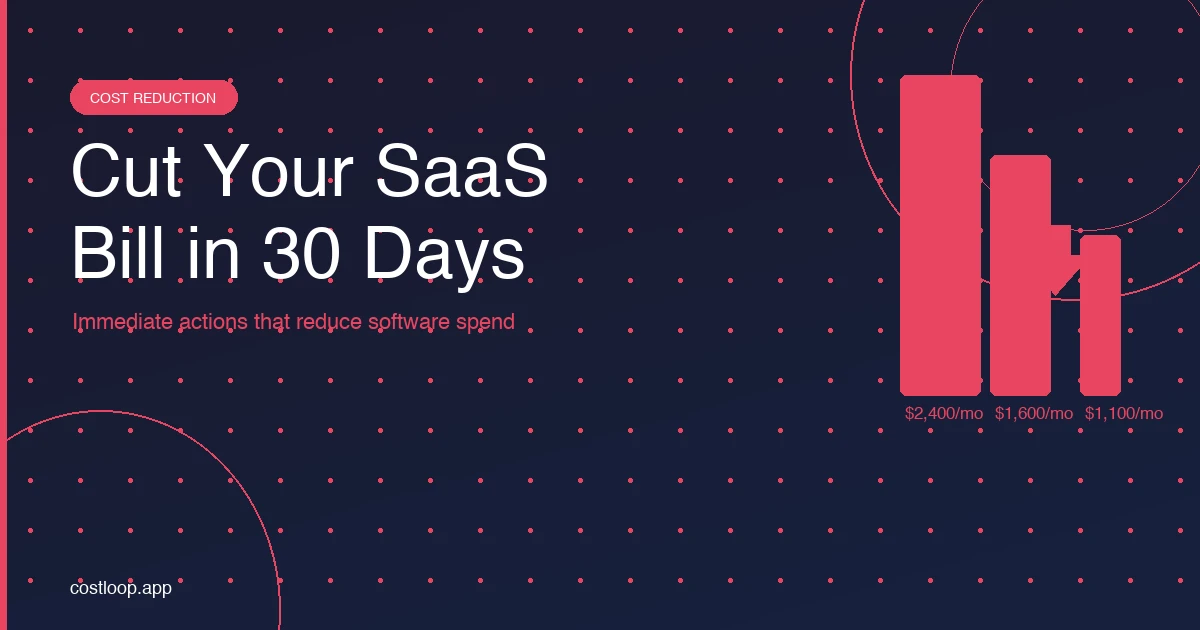
The direct cost is the easiest to understand - you are paying for software nobody uses. A $30 per month tool that a team member abandoned six months ago has cost you $180 by the time you notice it. How to cut SaaS costs effectively starts with addressing sprawl, because no negotiation or downgrade strategy works until you know exactly what you are paying for.
But there are less obvious costs too. Sprawl creates security risk - more tools means more vendor relationships, more access points, and more data being shared with third parties you may have forgotten about. It creates operational friction - when your team does not know what tools exist, they either spend time looking for the right one or sign up for something new instead. And it creates decision fatigue - the more options are available, the harder it is to standardise on anything.
A SaaS management tool like CostLoop shows you every subscription in one place - costs, renewal dates, and cancellation links. No more surprises. Track your SaaS spend and spot the tools worth keeping.
Start free - no credit card neededHow to fix SaaS sprawl
The fix is not complicated, but it does require doing a few things that most businesses have never done systematically. For definitions of key SaaS terms used throughout this process, see the subscription management glossary.
Step 1 - Build a complete SaaS subscription inventory
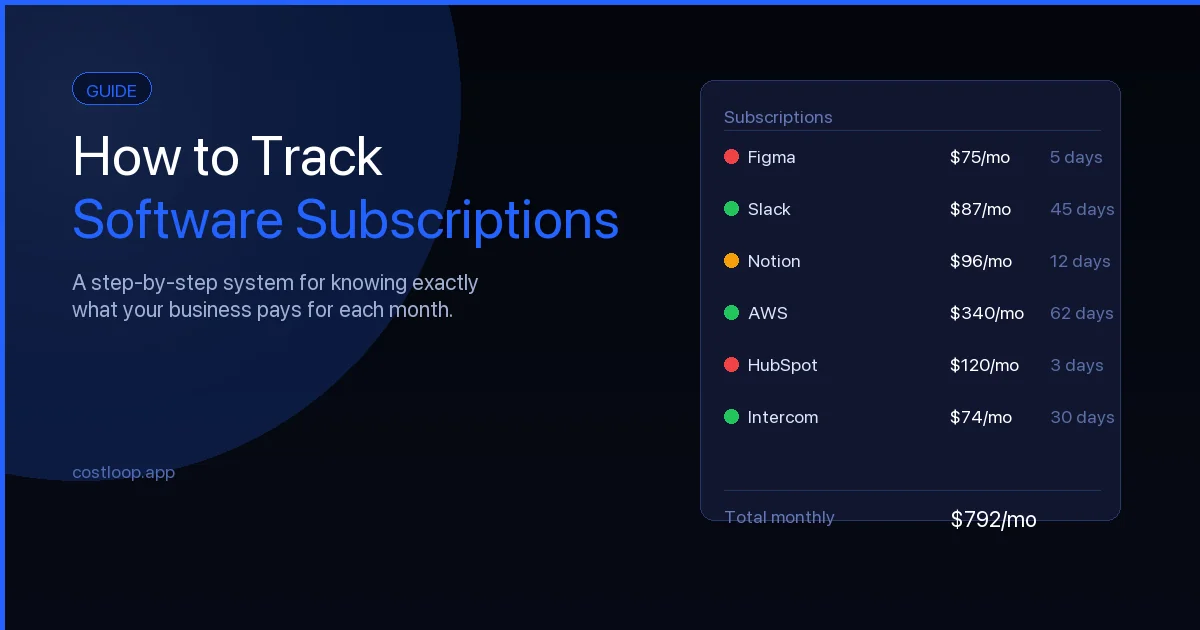
Go through three months of bank and credit card statements and list every recurring software charge. Include the tool name, cost, billing frequency, who uses it, and when it next renews. This software inventory is the foundation of everything else - without it, you have no clear picture of what software duplication or waste exists.
Do not rely on memory or team members telling you what they use. The statement does not lie - if there is a charge, there is a subscription.
Step 2 - Assess each SaaS tool for actual usage and value
For each tool on the list, ask one question: if this disappeared tomorrow, would anyone notice within a week? Tools that pass that test stay. Tools that fail it get cancelled or put on a 30-day trial where someone has to actually use them or they go.
Pay particular attention to tools that have been on the list since before your last big project change. What was useful 18 months ago is often less useful now.
Step 3 - Create a SaaS approval process for new tools
The inventory is a one-time fix. Keeping sprawl from returning requires a process. At minimum, set a rule that any new tool subscription gets recorded immediately when it is created. Most businesses that struggle with sprawl have never written down when they signed up for things - so they have no way of knowing what exists.
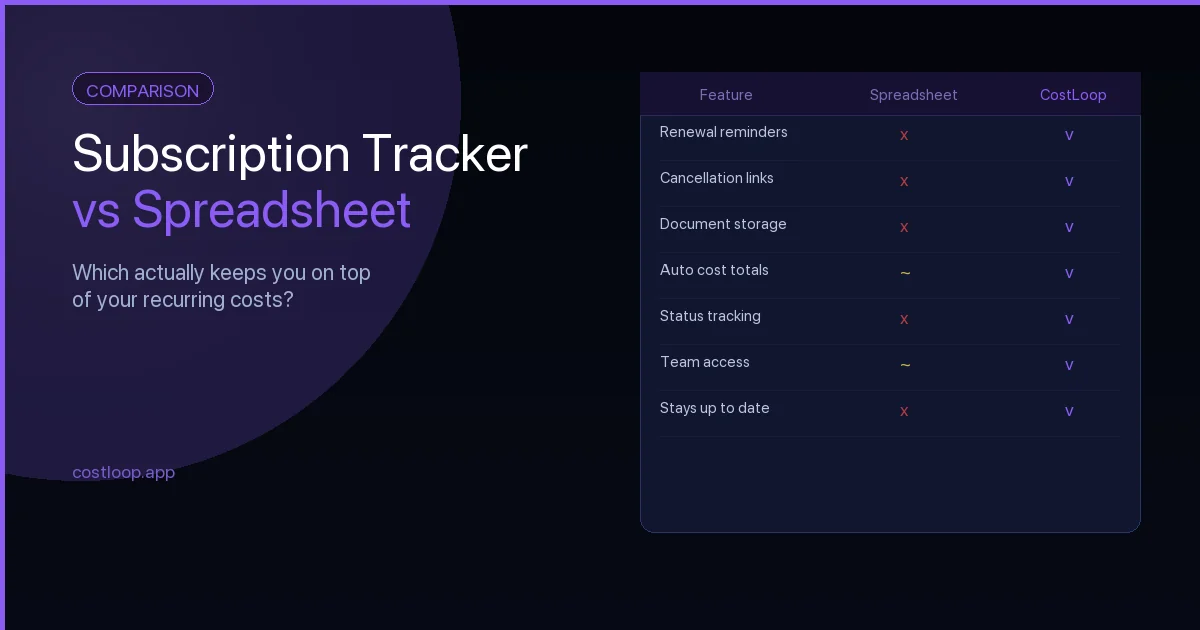
A software subscription tracker makes this easy because it becomes the natural place to add new tools as you sign up for them. When renewal time comes, you already have everything in one place to make an informed decision.
Step 4 - Review your SaaS stack quarterly to prevent sprawl
A 30-minute review every three months keeps the list current. Go through what you have, check usage on anything that looks marginal, and cancel anything that has drifted into the "nobody would notice" category.
The subscription audit checklist gives you a structured way to run this review. Once you have done it once, subsequent reviews take less time because the baseline is already built.
The goal is not zero tools - it is intentional tools
Fixing SaaS sprawl does not mean cutting software aggressively. It means knowing what you have, knowing what it costs, and making deliberate decisions about what stays. Some businesses find they actually need to add tools once they can see clearly what is missing - but most find they need fewer tools than they are currently paying for. Setting a clear SaaS budget for small and medium business gives you a benchmark that makes new tool additions a deliberate decision rather than an accumulation by default.
The difference between a business with sprawl and one without is not how many tools they use. It is whether anyone knows what those tools are and why they are there. What to store in a subscription record makes that possible.
SaaS tools for business: when the stack starts working against you
SaaS tools for business are intended to make teams faster and more effective. SaaS sprawl is what happens when the stack grows past the point of being useful - where managing the tools takes more time than the tools save.
The threshold varies by team, but the pattern is real: once the tool stack becomes hard to manage, cognitive overhead, duplicate spending, and security surface area can grow without proportional productivity gains. Each new tool requires onboarding, login credentials, billing management, and a mental slot in the team's awareness.
The fix is not cutting everything - it is periodic consolidation. The goal is identifying which tools genuinely earn their cost through measurable output and cutting the rest before they accumulate. A regular SaaS spend management review gives you the structure to make that call systematically rather than reactively.
SaaS growth tools: how the best ones compound, and the rest just accumulate
Not all SaaS tools grow with your business. Some are genuine multipliers - tools where the value compounds as the team grows. A CRM becomes more useful as your customer base expands. A project management tool becomes more essential as more people need coordination. These are growth tools: the value scales with the business.
Others are point solutions that made sense at a specific moment and accumulate as the business moves on. A tool you adopted for a particular project, a free trial that became a habit, a category you have since addressed with a better option - these sit in the stack paying their monthly fee while delivering less and less relative value.
Distinguishing the two is what makes SaaS sprawl management effective. Keep the compounding tools - they earn their cost more over time. Cut the point solutions that have lost their purpose. A SaaS audit guide gives you the structured approach to make that distinction across your entire stack.
Frequently asked questions
CostLoop is a subscription tracker built for small and medium businesses and freelancers. Track every tool, get renewal reminders, and keep cancellation links ready. Start for free.